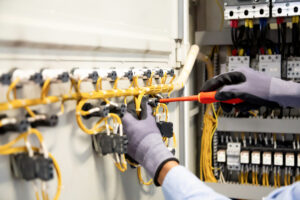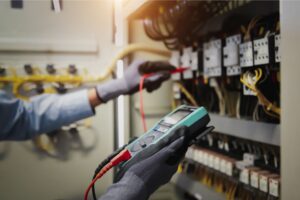
If you’ve ever opened an industrial control panel — especially during a custom panel build or retrofit — you know it’s rarely “one voltage, one job.”
A typical automation panel or system might contain:
- 600V three-phase power (Canadian based feeders, motors, larger equipment)
- 480V three-phase power (Common on US based industrial machinery)
- 208V three-phase power (smaller drives, auxiliary loads, power distribution)
- 120V control power (Power supplies, receptacles, equipment suppy)
- 24VDC control power (PLCs, sensors, safety circuits, I/O)
Because all of these systems often live in the same enclosures and wireways, one common question comes up during panel/machine builds:
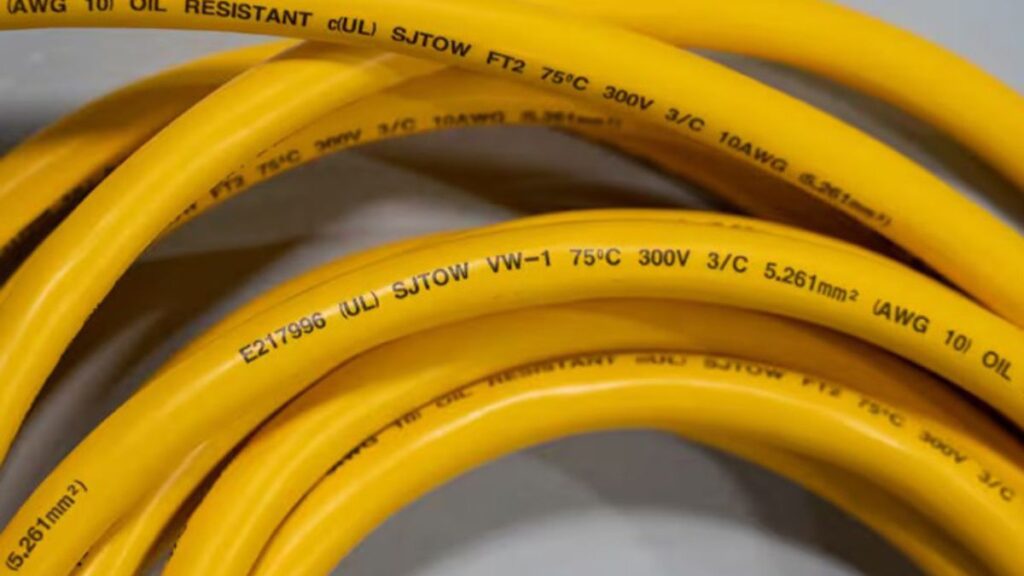
Can we use 300V-rated wire for the 24VDC or 120V wiring if it’s in the same Enclosure, Panduit, or raceway as the higher-voltage circuits?
In almost all cases, the answer is NO — and the reason is simpler than it sounds.
The Key Principle: The Space Matters as Much as the Voltage
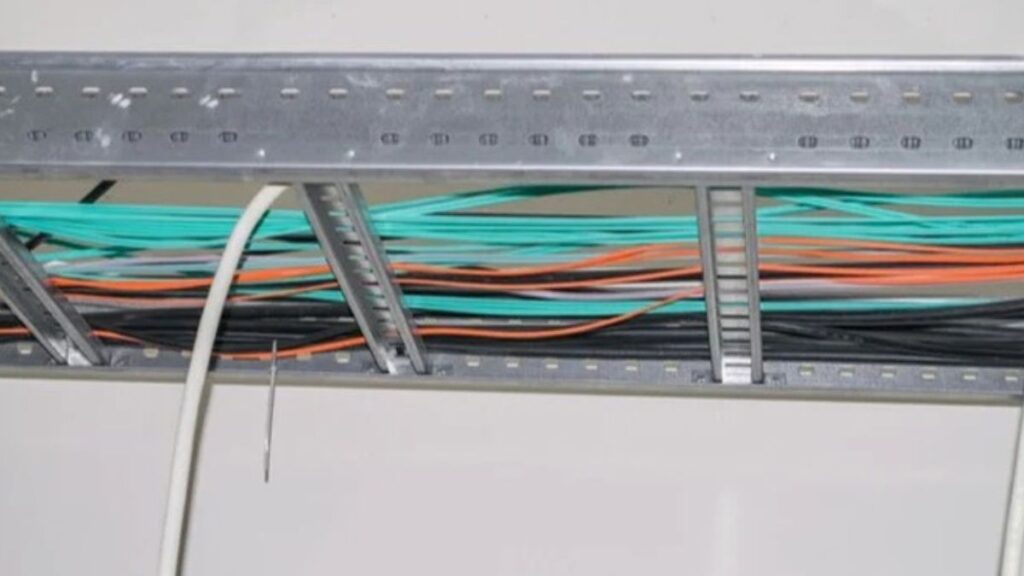
In Automation Systems, conductors are frequently routed through shared wiring spaces such as:
- Panels and Station boxes
- Panduit / wire duct
- Wireways
- Raceways
- Junction boxes
- Shared enclosure compartments
Electrical codes are concerned with what happens if something goes wrong, not just what the wire normally carries.
When conductors share the same wiring space, the insulation on every conductor must be suitable for the highest voltage present in that space.
So if your Panduit duct or wireway includes any 600V class conductors/circuits, then conductors in that same duct should be 600V rated, even if some of them only carry 24VDC.
Why This Rule Exists
Even when low-voltage control wiring is operating normally, mixed-voltage routing can create risk during abnormal conditions such as:
- insulation damage during installation or maintenance
- abrasion over time (especially in tight ducting/raceways)
- loose strands, cut insulation, or a dropped conductor
- faults or arcing from higher voltage conductors
- heat stress near power wiring
If a higher-voltage conductor faults or arcs, nearby lower-rated insulation may not withstand the exposure. Matching the insulation rating to the highest voltage present helps reduce that risk and supports a safer, more robust build.
What This Means in Real Automation Systems and Panels
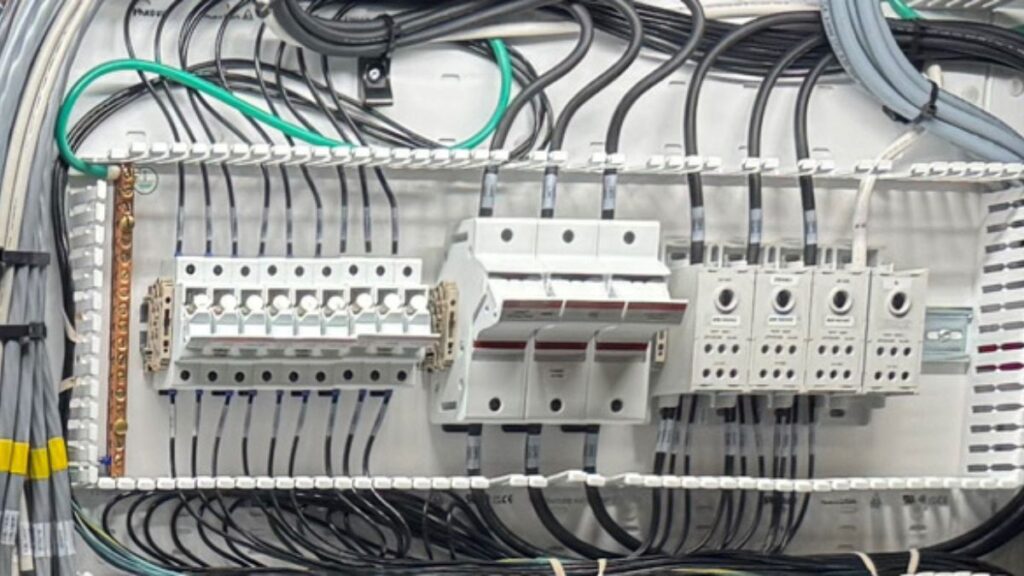
If a panel includes 600V / 480V / 208V three-phase power and those conductors are routed in the same duct as:
- 120V control wiring
- 24VDC PLC/sensor wiring
- multi-conductor control cable
- shielded instrumentation cable
…then the simplest and most inspection-friendly approach is:
Use 600V-rated conductors throughout the system.
This is one reason many professional panel builders standardize on 600V MTW/TEW, and 600V rated cable assemblies for machine wiring, even for low-voltage circuits.
Can 300V Wire Ever Be Used?
Sometimes — but only when it’s physically separated from higher-voltage wiring.
Examples could include:
- a separate wireway or duct dedicated to low voltage
- barrier separation within the enclosure, or separate enclosures
- separate conduit or isolated routing paths
If the wiring shares the same duct or enclosure space as 600V class circuits, 300V insulation is generally not the right choice.
How Electrilogix Builds for Reliability (and Smooth Inspections)
At Electrilogix, we build panels to be:
- code-aligned
- inspection-ready
- consistent and serviceable
- safe under real-world conditions
That means we pay attention to details like conductor insulation ratings and mixed-voltage routing — because these are the exact items that can create rework, inspection delays, or reliability issues later.
If you’re planning a new control panel build, panel retrofit, or need electrical support during a machine build or commissioning project, we’re happy to help ensure it’s done right the first time.
Electrilogix
Built on Industrial Experience. Trusted in Every Environment.